Furniture
A Sleeper Sofa That Works in a Studio Apartment
Choose a studio sleeper sofa by measuring the room with the bed open, testing the mechanism and comparing where bedding will live.
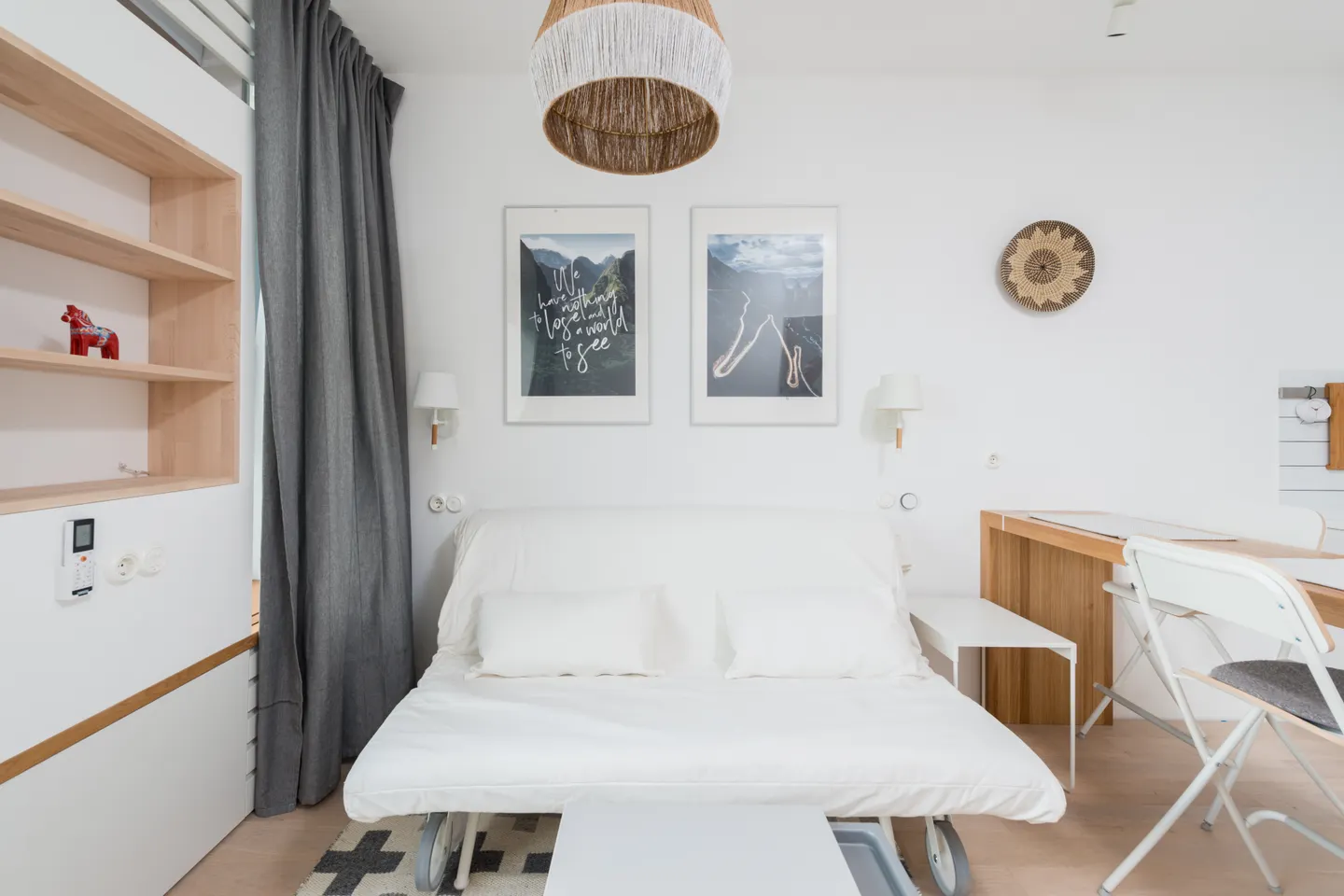
A sleeper sofa changes which part of a studio belongs to the bed. During the day, the room may have space for a table or a visitor. At night, the open frame might cut the route from the kitchenette to the bathroom or cover the only drawer that holds a spare sheet. Shop for the complete room in both positions. A comfortable sofa is easier to live with if opening the bed takes one clean movement and the things you shift have somewhere sensible to go.
Draw the sofa and the bed separately
Start with the true overall width and depth of the sofa, including the arms and anything that projects from the back. Add the manufacturer's measurement for the opened frame and your space to pull it out. Some beds project from the seat front. Some swing or fold along the length of the sofa, and others need a little room behind before the back can lower. Note whether cushions are attached and whether you can open the bed when the sofa sits flush against a wall. Save the diagram for the actual model, since two products with the same bed size may occupy different amounts of floor.
Tape the outline to the floor, then add the things that stay. Allow for a radiator, window trim, sockets, the door swing and the protruding edge of a low desk. If the door to the bathroom opens into the usable area at the foot of the bed, try an alternate orientation. In real apartments, the last few inches are often lost to a handle or a bed frame that protrudes beyond the mattress. Someone may also need to use the room while the sleeper is open, so test whether an ordinary walking route is still possible.
Carry out the opening routine with the current coffee table, rug and side furniture in place. Use a large piece of cardboard to mark the open bed. Move the coffee table across the floor and stop where you think it can stay overnight. Is the surface now in front of the closet? Does it block an outlet or force you to squeeze between it and the kitchen? A small side table by an arm may be a better everyday alternative if you keep pushing the central table somewhere awkward.
Compare how the mechanisms use space
A conventional pull-out sofa bed has a folded mattress and frame concealed within the seat. It can offer unbroken back cushions and an ordinary sofa feel when closed. Opening it may require removing and storing the loose cushions, leaning forward to grip the frame and letting the legs unfold. Check the mechanism while standing where you would in the apartment. A short studio may not give you the same space to back away from the frame as a showroom does.
A fold-down sofa uses its seat and back as parts of the sleep surface. Some models need clearance at the wall and others use a track that moves forward as the back lowers. Inspect the joining line in the sleeping position and see how the pieces align when someone uses the center of the bed. Test whether it can be placed a little forward without wasting the narrow strip behind it. A sofa that must be repeatedly dragged away from the wall can wear the floor and may soon stay in the position where it is easiest to use.
A daybed or trundle is worth comparing in a room where the sofa can sit along a long wall. A deep, fixed sleep surface can be easier to make and avoids folding a mattress. Some trundles slide out only as low beds. Others raise to align with the main bed through a specific mechanism. Deduct the area to stand and lift the frame in addition to the open footprint. Check whether the trundle can travel over your rug and whether the product restrictions suit the people who will use it.
For any moving frame, open and close it several times and follow the staff's demonstration or the owner's guide. Ask how far your hands need to reach and what cushions or covers have to come off. Check that the parts lock in the positions the manufacturer specifies. Find the actual product instructions before deciding how often you can realistically convert it. Look for any load restrictions and guidance about keeping hands, feet or objects clear of moving parts.
Test the bed if someone will sleep there often
Lie on the open model for more than a moment if the seller allows it. Try the sleeping position you use at home, and notice whether the edge remains supportive when you turn. A sleeper reserved for visiting adults has a different job from a bed used every night. If two people expect to sleep on it, assess how the support feels when one person moves and how each person will get up. Sometimes the best dry run is making and getting into the product side by side.
Mattress thickness is only one factor. The construction under the mattress, the condition of the slats or fabric deck and the joints in the base affect how the surface feels. Ask what mattress can replace the original when it wears out. Sleepers may require a particular thickness, flexibility or fold pattern to close correctly. A separate topper can change the feel, but it also needs a place to go during the day, and you may have to remove it every time a fold-up bed closes.
Read the dimensions for the actual sleeping surface. Sofa arms can make the furniture wide without making the bed wide. The usable length may be shorter than you expect from a broad frame. Bedding in standard local dimensions may still fit, but check the mattress depth and corners before buying a set. If bedding has to come off every day, think about how you will keep it clean and dry between uses. A shallow basket can work for a blanket, while a thick duvet may call for an entire shelf.
Judge it as an ordinary sofa
Sit upright as if you were watching a film, eating on a tray or having a conversation. The same bed mechanism that makes a sleeper useful can limit the choice of seat depth or cushion thickness. If the seat is too deep for your legs, a lumbar cushion can fill a gap. Several extra cushions are more things to store at night. Try standing from the seat without pressing on the arms. See whether the pitch of the seat and height of the front edge suit you.
Look at daily details. A removable cover can be easier to maintain when meals and work happen close by. Ask whether the sofa fabric can be washed, spot cleaned or cleaned professionally. Check how the cover fastens where the frame opens. Dense fabric and a softly padded arm can make good places to read. A fragile finish on the inside of a pull handle will have a different kind of wear when you make the bed daily.
Think through delivery and repairs. Measure the smallest door, stair turn, elevator and landing. A sleeper can be heavier than a conventional sofa of the same size because of its internal metal frame. Ask whether it comes apart for delivery and whether the legs, arms or mechanism can be removed without voiding the warranty. If the supplier can repair a hinge or replace a handle independently, keep the model information somewhere you can find it. A low advertised price matters less if the sofa cannot reach the room intact.
Put the loose pieces where they already fit
Give the bedding and displaced cushions separate places with enough room to pick them up easily. Take a small studio where the sofa faces a low cabinet a few feet away. A pair of chairs can stay against one side wall. A deep coffee table has to move nightly. Replacing that table with one small, stable piece next to the arm lets the walking route stay open. The lower compartment of the cabinet holds clean bedding, and a light basket near the sofa holds two loose back cushions overnight.
Try the reverse plan in the morning. Leave enough counter or floor space to set down a folded blanket while you close the bed. If you intend to make the bed every day, tuck in a sheet and close the mechanism during a product demonstration. Ask the seller if linens can remain in place. Some frames are designed to fold bare, and keeping bulky bedding inside can interfere with the way the parts seat. A small effort each day adds up when the studio turns from bedroom to living room before breakfast.
In a studio with no hall closet, try a lidded bench along the wall if there is enough room to access the lid. It can keep spare bedding together while providing another seat. A bench that opens toward the sleeper may be inaccessible at night. In that case, put the sheet and pillowcase in a drawer you can open after the frame has been pulled out. Leave enough room for air to circulate around bedding before packing it away if it has picked up moisture overnight.
A good decision leaves a usable route on the floor with the bed open, a seat you would use even without the spare bed and an easy place for every item you move. By testing those conditions first, you might find a compact fold-down arrangement does everything you need, or decide the steadiness of a daybed justifies its larger daytime footprint. Use the layout trial to make the choice before the furniture takes up the room.