Materials
Translucent Room Dividers for Small Homes
Compare reeded glass, translucent panels, open shelving and fabric to retain daylight and get the privacy a small room actually needs.
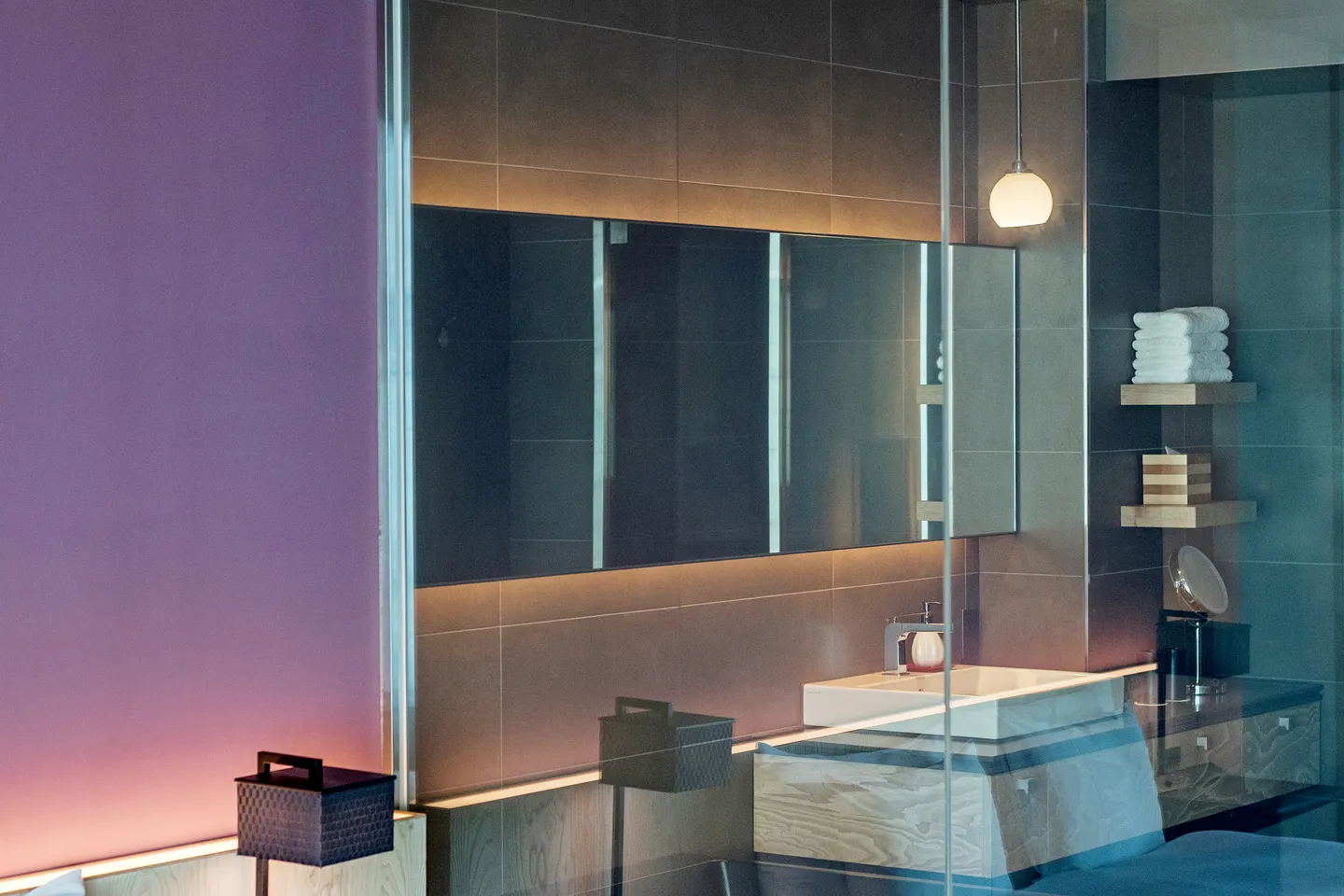
A room divider can hide a messy bed or give someone a quieter place to sit, but it might also stand between that part of the home and its only window. A translucent divider changes what travels through it. Some admit a soft wash of light and blur the view. Others keep the room bright by leaving generous openings around shelves or battens. Choose the amount of screening you need for the activities on each side. Then test the same material in daylight and when the room behind it is lit after dark.
Name the kind of privacy you want
Privacy may mean that a bed does not appear in the background of a video call, that a visitor does not see a changing area or that two people can talk without hearing one another. These aims require different construction. A fabric or open-slatted screen can cover the view reasonably well from one direction. It will do little to stop speech reaching another person. A room divider with a close-fitting frame and glass can be more effective, but gaps around the edges or another path through the building may still transmit sound.
Check the position where people see through the opening most often. A screen near the foot of the bed might conceal it from the front door while leaving it visible from the sofa. Slats can hide the bed when viewed at an angle and expose it from directly ahead. If the objective is visual privacy from one chair, a short panel in the correct place may be enough. If a person will dress behind it while visitors can move about freely, look for better edge coverage and test every normal approach.
Think about silhouette and distance. A person standing close to a translucent sheet can cast a clear shadow through it when the far side is bright. Putting the sheet a few feet from the activity and shifting a lamp away from that direction might soften the outlines. Test with a person, coat or box standing on each side before buying. The word frosted does not say what a panel will do under uneven light, and descriptions such as private can vary from one supplier to another.
Compare materials where you would place them
Reeded or textured glazing can scatter the view while admitting useful light. The texture has a directional effect, and manufacturers make profiles of different widths and depths. Hold a full sample sideways, then upright, over something with distinct shapes. Bring it close to the object and then step away. If the top of the divider is held against a bright ceiling or window, compare the brightness of the shadow side with and without the glass. You might accept a more opaque piece if its upper part can remain clearer.
A translucent plastic panel can weigh less than a comparable glass assembly. It may also flex, expand, scratch or respond to cleaners differently. Ask for the actual panel's product sheet. Thin sheets and unsupported spans may sound different when tapped or vibrate near a door. If the material is part of the permanent building finish, have suitability, fixings and any fire or glazing requirements checked. A sheet sold for a craft project or a greenhouse may be unsuitable for a large panel inside an occupied room.
Where you need advice from a supplier, describe the full assembly and ask for information about visible light transmission and haze if it is available. Transmission indicates how much visible light makes it through a sample. Haze describes scattering under a specified test and is only one clue about how easily someone will see a person or object behind the material. A sample within the correct frame, with the actual joints and finish, shows details that the numbers cannot. In a dusty kitchen-facing spot, also ask which side carries a textured surface and how that side is normally cleaned.
Open shelving can create some separation without casting as deep a shadow as a solid panel. Test the layout with objects at several heights to estimate what it looks like once the shelves fill. A wide bookcase that looks open on a product page can turn nearly opaque when it holds books at every level. If keeping a view of the window matters, leave the upper area open and put opaque storage at a useful lower height. Use furniture that is designed for the position and anchorage specified, especially when it projects into a room.
Fabric gives you a large, soft surface without a rigid frame, and an approved track system can move it aside when you want more light. Try actual cloth against both sun and interior light. A dense linen-look weave might hide more detail than a thin sheer but still glow at night. A curtain that touches the floor has a more complete visual edge. It can also catch on a rug, collect dust or obstruct a floor vent. Keep fabric clear of heaters, hot equipment and busy movement paths, and check the way the material should be cleaned.
Preserve the route to the window and door
Mark the intended length of the divider and its support on a floor plan. Then mark doors, power outlets, ventilation, windows and heaters. A glazed panel might let light through while taking away the space needed to open a window or use a handle. Keep required light, ventilation, access and emergency escape clear. A moveable screen has to be stable in the places it will stand and has to have a normal place to go when it is folded. Leaving it loose against a wall has a different impact from safely parking it in its own space.
If you prefer a sliding divider, draw the fixed and moving sections. Some designs leave half the span closed when they are parked. A curtain usually gathers to a smaller width, but the stack still needs room and may take away the edge of the view. A short hinged panel may work with less hardware and still need a swing clear of seats and tables. Walk the floor with a large box to simulate furniture and see whether the divider makes moving through the opening uncomfortable.
Fixed glass has to be specified and fitted by people familiar with the building and the regulations where you live. Local requirements may govern the type of safety glazing, its position and how a large surface is marked to make it visible. In the US, for example, the Consumer Product Safety Commission lists requirements for certain architectural glazing materials. Ask how the chosen system is installed, cleaned and serviced, including what happens if a panel is damaged. CPSC standards index
Use daylight while choosing a separate night setting
To test the effect of screening, put a sufficiently broad sample, a framed sheet of paper or a representative fabric in the proposed position. Walk to the point where you normally sit to read. Does direct light still hit the page? Is the wall behind the divider noticeably darker? Try moving the divider a little farther from the window before choosing a lighter material. Light may travel around the end of a panel if its alignment is changed, bringing practical light to the room while leaving the main view screened.
At night, turn on the brightest lamp likely to be behind the divider and look from the darker side. Glazed dividers may reflect lamps and people on the bright side. The reflections can grow strong enough to make the edge appear busy from a particular chair. Textured daylight can be pleasant and still expose movement behind it when the interior light levels reverse. If you need a choice at night, a well-placed curtain on the private side can add adjustable screening without making the daytime condition permanently opaque.
If the purpose is keeping voices private, test speech too. Put a conversation on one side of a temporary divider and listen from the other, with the room arranged as it will be. A dense curtain can change how live the room feels but will not provide the same isolation as a well-sealed, engineered partition. A wide opening at the top leaves a path for sound even when the material looks solid. If isolation matters for work or sleep, discuss the whole partition and adjoining construction with someone who understands its acoustic performance.
Try a short divider before committing to a new wall
Consider a one-room work and sleep space with a window on the far wall. The bed sits near the window and the desk is closer to the entrance. A full screen across the middle could give the desk an orderly background and leave it in permanent shade. A shorter reeded panel set nearer the bed may hide the mattress from the camera and leave a free gap on the window side for light and movement. During the day, a light on the desk takes care of close work. At night, a curtain behind the glazed part can cover the outlines when someone needs visual privacy.
Try the same relationship with a temporary screen and the real desk position. Check the view at the entrance and in the camera as well as from the seat. If a visual problem can be solved with a short panel, the floor remains open and the installation can be simpler. If the missing privacy is a long conversation that two people need to have at the same time, rearranging the light and sightline will not fix it. Choose the material after the mock-up shows which problem is left. The selected divider should make a small room easier to share throughout the day.